About NCAI
The Unified Voice of Indian Country
Founded in 1944, the National Congress of American Indians (NCAI) is the oldest, largest, and most representative American Indian and Alaska Native organization serving the broad interests of Tribal governments and communities. We engage in legislative and administrative advocacy on behalf of our membership and strive to ensure that member Tribes and individuals are informed and educated about all issues affecting the well-being of Tribal Nations.
Since its founding, NCAI has remained true to its original purpose: to be the unified voice of Indian Country.
Membership & Governance
There are four main categories of membership with NCAI: Tribal Nation membership, Individual Tribal Membership, Associate Organization Membership, and Individual Associate Membership. Individual Tribal Members and Individual Associate Members may opt for yearly or lifetime memberships. Learn more about NCAI membership and join now, here.
The organization’s Executive Committee — which includes the President, First Vice President, Recording Secretary, Treasurer, and twelve Regional Vice Presidents — is elected by NCAI’s voting membership, which includes Tribal delegates and Individual Indian Members. The twelve Regional Vice Presidents are elected by the members of their respective regions.
Learn more about NCAI Leadership, Governance, and Membership.
Policy Advocacy & Education
For over eight decades, NCAI has been the leading voice representing Tribal interests in Washington, D.C., ensuring that the federal government upholds its treaty and trust responsibilities to Tribal Nations and their citizens.
Our History
In November 1944, approximately 80 delegates from nearly 50 Tribes assembled in Denver, Colorado. There, they established the National Congress of American Indians. The organization was founded in response to the urgent and emerging threat of termination, a period in history when the federal government intended to sever its relationship with and abdicate its responsibility to Tribal Nations and their citizens.
NCAI’s founding members stressed the need for unity and cooperation among Tribal governments and American Indian and Alaska Native peoples for the protection of treaty and sovereign rights. They also committed the organization to striving for the improvement of the quality of life for all Native people.
Learn more about the histroy of NCAI in a brief history of the organization, here.
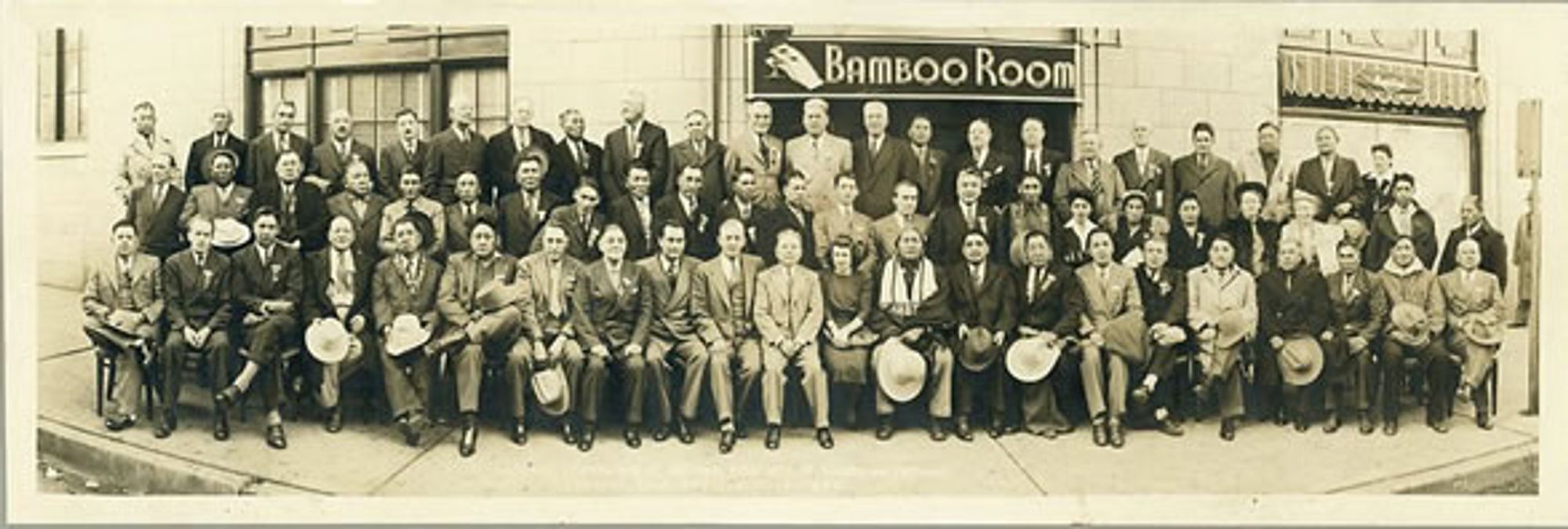
The 1944 Constitutional Convention in Denver, Colorado (November, 1944). A list of those photographed above is available here.
Support NCAI
NCAI’s work is made possible through generous foundation and partner support, annual Tribal, organizational, and individual membership fees, as well as donations from individuals. To support NCAI, visit the NCAI Foundation donation page or contact the National Congress of American Indians Foundation (NCAIF) at foundation@ncai.org. Learn more about NCAIF here.
