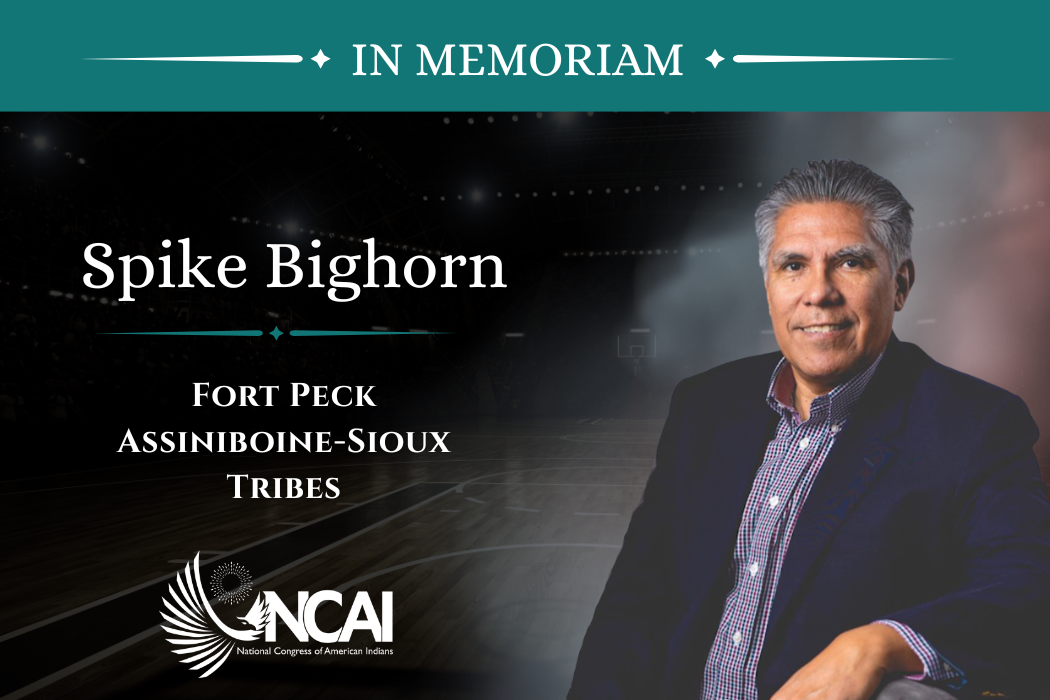
WASHINGTON, D.C. — The National Congress of American Indians (NCAI) joins Tribal Nations across the country in mourning the passing of Spike Bighorn, a respected Fort Peck Assiniboine and Sioux leader, former Tribal Chairman, and longtime public servant. Bighorn dedicated his life to strengthening Tribal governance and improving federal programs serving Native people, including years of leadership within the Bureaus of Indian Affairs and Indian Education, where he worked to make systems more responsive to Tribal Nations and Native students. He was equally committed to inspiring the next generation, speaking directly to Native high school students through initiatives such as the “I Care If You Graduate!” series to encourage them to pursue education and overcome barriers.
Beyond his work in government, Bighorn was known as a rezball legend and one of the first Native American referees to officiate at Montana state basketball tournaments, opening doors for future generations of Native athletes and officials and inspiring Native youth far beyond the court.
“Spike Bighorn’s life was defined by service to his people,” said NCAI Executive Director Larry Wright, Jr. “From the council chambers at Fort Peck to his work in federal service and his example on the basketball court, he showed what it means to lead with humility, integrity, and love for community. NCAI extends our deepest condolences to his family, the Fort Peck Assiniboine and Sioux Tribes, and all who were touched by his leadership and friendship.”
NCAI honors the life and legacy of Spike Bighorn and commits to carrying forward his vision of strong, self-determined tribal nations, thriving Native students, and resilient Native communities across Indian Country.
###
About the National Congress of American Indians:
Founded in 1944, the National Congress of American Indians is the oldest, largest, and most representative American Indian and Alaska Native organization in the country. NCAI advocates on behalf of Tribal governments and communities, promoting strong Tribal-federal government-to-government policies and a better understanding among the general public regarding American Indian and Alaska Native governments, people, and rights.
