Policy Issues
International Advocacy
NCAI’s International Advocacy portfolio elevates the issues facing American Indian and Alaska Native Peoples beyond the U.S. domestic sphere and into the context of global colonialism, calling back to the original recognition of Indigenous Peoples as sovereign entities with relations sounding in international law and customs.
The United States has always recognized Tribal Nations as inherently separate sovereigns, and international platforms offer an opportunity for collaboration and networking with other Indigenous sovereign groups to seek equality, recognition, and remediation. International organizations and coalitions offer an opportunity to heighten the standard by which the United States engages with the Tribal Nations within its borders and give Tribal leaders self-representation on the global stage.
In conjunction with domestic and international organizations, NCAI supports Tribal leaders’ participation at multiple offices within the United Nations and the Organization of American States. NCAI continues to press for Indigenous inclusion at the highest levels of U.S. diplomatic engagements, and recently renewed its commitment to collaborating with the Assembly of First Nations within Canada, in solidarity with Indigenous Americans across modern borders.
About the United Nations Permanent Forum on Indigenous Issues (UNPFII)
NCAI had a strong presence at the 25th Session of the United Nations Permanent Forum on Indigenous Issues, held April 20–May 1, 2026, in New York City.
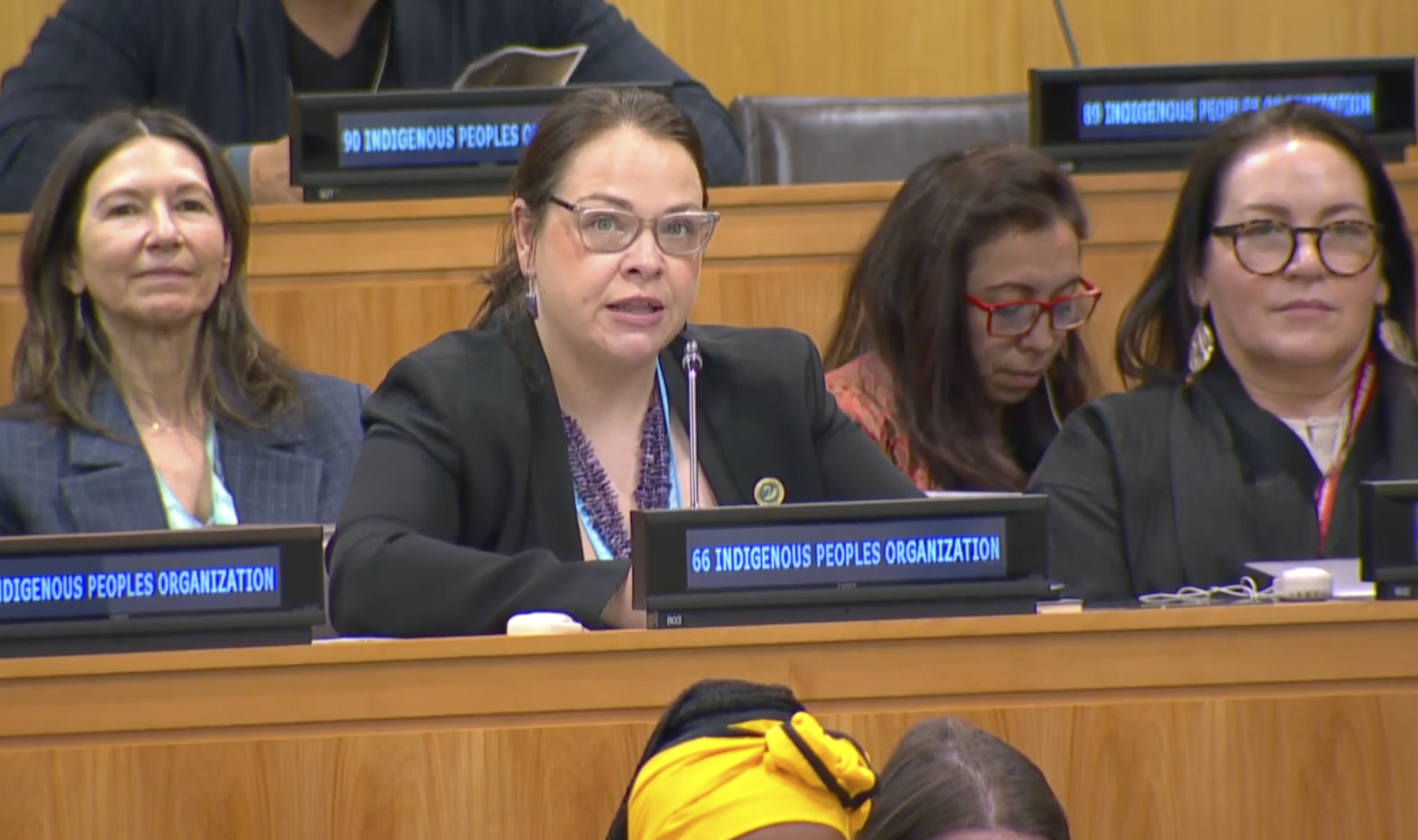
NCAI Director of Policy Meghan Bishop delivered an intervention on behalf of NCAI and the Native American Rights Fund (NARF), calling for implementation of the World Intellectual Property Organization (WIPO) Treaty on Intellectual Property, Genetic Resources and Associated Traditional Knowledge, with meaningful and adequate funding to enable Indigenous Peoples to directly participate in ongoing negotiations.
NCAI and NARF submitted additional interventions on important issues — including the need for the UN and its bodies, such as the UNPFII, to expand opportunities for direct participation by Indigenous Peoples.
UNPFII Wrap Up Report (2026)
The 26th session of the UNPFII will be held in person at the UN Headquarters in New York in the spring of 2027. The session will coincide with the 20th anniversary of the UNDRIP.
About the Expert Mechanism on the Rights of Indigenous Peoples (EMRIP)
The 19th session of the Expert Mechanism on the Rights of Indigenous Peoples (EMRIP) will be held in person from July 13 to 17, 2026, in Geneva, Switzerland.
Established in 2007 by the UN Human Rights Council, EMRIP provides expert advice and research-based recommendations to promote and protect Indigenous rights under the UN Declaration on the Rights of Indigenous Peoples (UNDRIP).
Each year, a five-day gathering occurs with representatives from states, Indigenous Peoples, Indigenous Peoples' organizations, civil society, intergovernmental organizations, and academia.
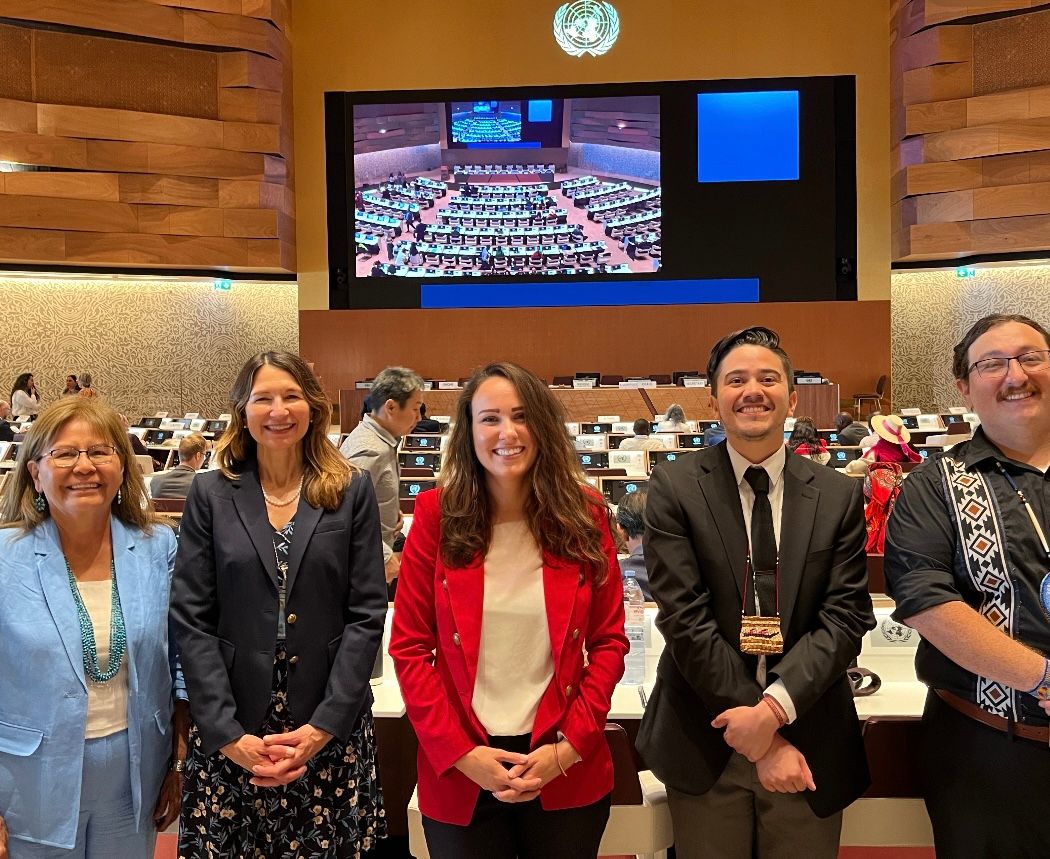
Linda Benally (Dinè Nation); Sue Noe, NARF; Rochelle Morgan-Verdin (United Houma Nation), NCAI; Aaron Jones (Tulalip Tribes), NCAI International Committee Co-Chair; and Emiliano "Milo" Salazar, University of Colorado Law School (July 2024)
About the UN Conference of Parties (COP)
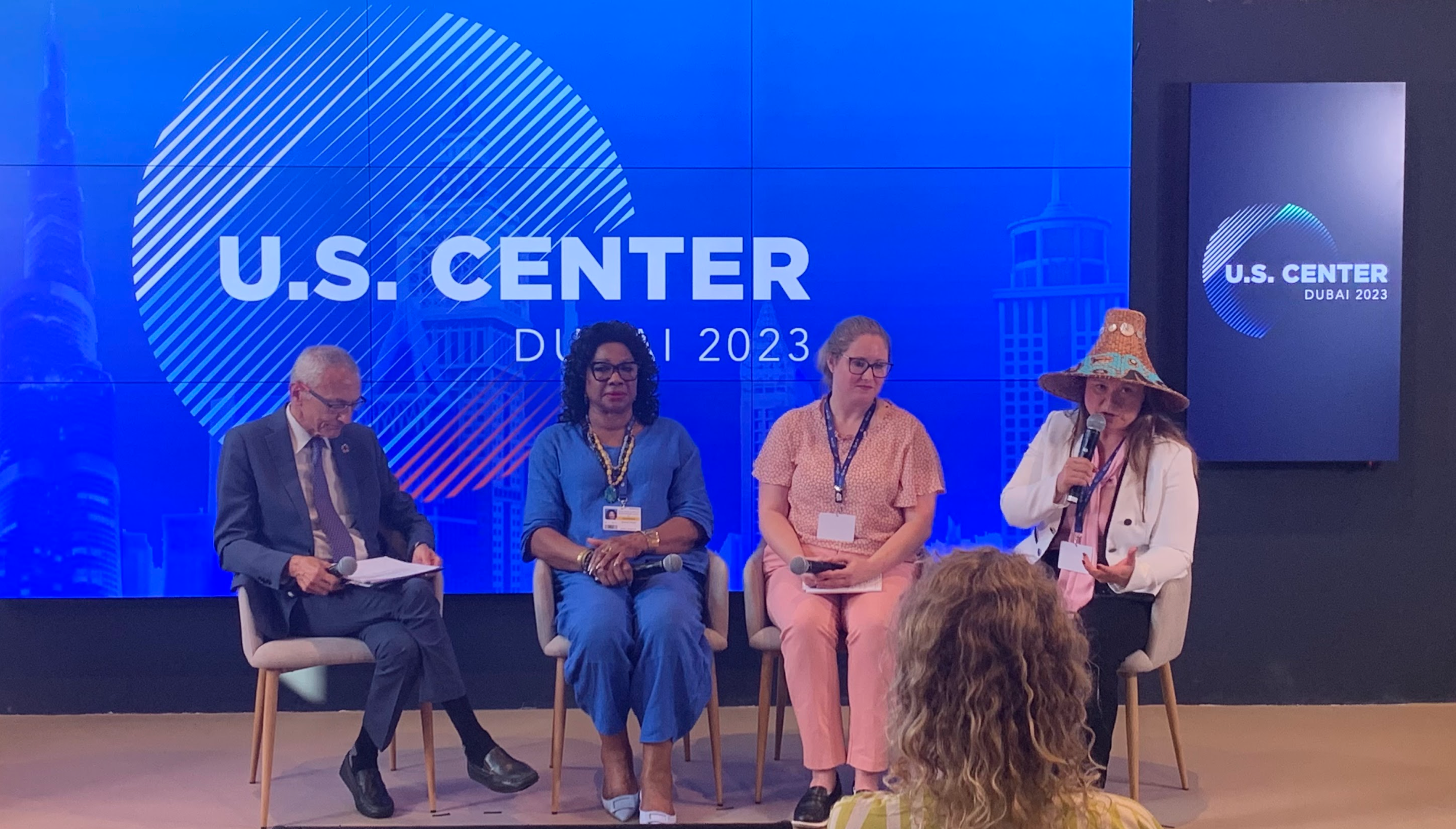
The next United Nations Framework Convention on Climate Change (UNFCCC) Conference of the Parties (COP30), also known as the UN Climate Change Conference, will be held in person from November 9–20, 2026, in Antalya, Türkiye.
This conference will bring together global leaders, negotiators, and stakeholders to address urgent climate change issues and work toward international solutions for mitigating and adapting to climate impacts.
The Sentinel Podcast — February 2025
Advocacy on the International Stage: The NCAI International Committee
Episode 20 | Part 1
In this episode of The Sentinel, we explore NCAI’s commitment to international advocacy work. NCAI has recognized that its mission of promoting tribal sovereignty must extend beyond the borders of the United States and include the representation, participation, and voices of Indigenous Peoples on a global stage.
Join us for a thought-provoking discussion led by Rochelle Morgan-Verdin, NCAI’s form Policy Lead for International Issues and citizen of the United Houma Nation, the Co-Chairs of the recently formed NCAI International Committee, and key experts who have advocated for these issues for decades. Our listeners will hear from guests who are all steadfast advocates representing NCAI at international fora, carrying forth the organization’s mission globally.
Episode 20 | Part 2
Part two continues our exploration of NCAI’s international advocacy work and examines further how NCAI’s advocacy for Indigenous Peoples on the global stage ties into its larger mission of promoting tribal sovereignty.
In this expanded conversation led by Rochelle Morgan-Verdin, NCAI’s former Policy Lead for International Issues and citizen of the United Houma Nation, we hear from two additional experts who have been deeply involved in the organization’s advocacy for decades. They shed light on the history of NCAI’s international work, what progress is being made today, and what we can expect in the years to come.
EMRIP: Seventeenth Session (July 8–12, 2024)
At the seventeenth session of EMRIP held July 8–12, 2024, Rochelle Morgan-Verdin, NCAI's Policy Lead for International Affairs, delivered two joint interventions on behalf of NCAI and the Native American Rights Fund (NARF) regarding matters of critical importance to NCAI's Tribal membership.
Policy Documents
COP 21 IP Closing Statement from NCAI
NCAI Written Statement UNDRIP 2012
